



How to Reheat Leftovers So They Taste Better
Leftovers do not have to feel like a compromise. With the right reheating method, last night’s dinner can come back warm, flavorful, and pleasantly textured.
Why Leftovers Often Taste Disappointing
Leftovers usually lose their charm for one of three reasons: they dry out, they get soggy, or they heat unevenly. The good news is that most of these problems are easy to fix once you stop treating every leftover the same way.
A microwave is fast and useful, but it is not always the best tool for the job. Ovens, stovetops, air fryers, toaster ovens, and steam can all help bring food back to life in different ways. The goal is to match the reheating method to the texture you want.
Think of reheating as a mini cooking step, not just warming food. A splash of liquid, a covered pan, a few extra minutes, or a hot skillet can make the difference between dull leftovers and a meal you are actually excited to eat.
The Golden Rules of Better Reheating
- Reheat gently when moisture matters. Soups, rice, pasta, casseroles, and meats often benefit from lower heat and added moisture.
- Use dry heat when crispness matters. Pizza, roasted vegetables, fried foods, and breaded items are usually better in an oven, toaster oven, skillet, or air fryer.
- Cover foods that dry out easily. A lid, foil, or microwave-safe cover traps steam and helps food heat more evenly.
- Stir or flip halfway through. This prevents cold centers and overcooked edges.
- Do not overheat. Many leftovers taste worse because they are reheated too long, especially chicken, fish, eggs, and vegetables.
How to Reheat Leftovers in the Microwave
The microwave is best for foods that are moist or soft, such as soups, stews, rice bowls, beans, pasta with sauce, mashed potatoes, and saucy casseroles.
Microwave tips that actually help
- Use medium power. Instead of blasting food on high, try 50% to 70% power for gentler heating.
- Add a little moisture. Sprinkle rice with water, add broth to meats, or stir a splash of milk into creamy pasta.
- Cover loosely. Use a microwave-safe lid, plate, or vented cover to trap steam without sealing tightly.
- Heat in short intervals. Stir every 30 to 60 seconds so the food warms evenly.
- Arrange food in a ring. If possible, place thicker pieces toward the outside of the plate and leave the center slightly open.
For plated meals, separate foods with different textures when you can. Reheat rice and saucy meat in the microwave, then crisp vegetables or bread separately in a skillet or toaster oven.
How to Reheat Leftovers in the Oven or Toaster Oven
The oven or toaster oven is ideal when you want food to stay crisp, browned, or evenly warmed. It works well for pizza, roasted vegetables, lasagna, baked pasta, casseroles, meatloaf, roasted chicken, breads, and pastries.
As a general rule, reheat most leftovers at 300°F to 350°F. Lower temperatures warm food gently, while higher temperatures help restore crispness. If food is already browned but needs to heat through, cover it with foil for the first part of reheating, then uncover it for the last few minutes.
Best oven method for casseroles and baked dishes
- Place the leftovers in an oven-safe dish.
- Add a small splash of broth, sauce, or water if the food seems dry.
- Cover with foil and heat at 325°F to 350°F until warmed through.
- Remove the foil for the last 5 to 10 minutes if you want the top to brown.
This method is especially helpful for lasagna, enchiladas, baked ziti, stuffing, and shepherd’s pie.
How to Reheat Leftovers on the Stovetop
The stovetop gives you more control than the microwave and is often the best choice for soups, stews, sauces, stir-fries, pasta, rice, and proteins that need gentle warming.
Use a skillet for foods you want to refresh with a little browning, such as fried rice, tacos fillings, roasted vegetables, or sliced meat. Use a saucepan for liquids and saucy foods.
Helpful stovetop techniques
- For rice: Add a spoonful of water, cover the pan, and warm over low heat until fluffy.
- For pasta: Add a splash of pasta water, broth, milk, or sauce and stir gently over low to medium heat.
- For meat: Add a little broth or sauce, cover, and warm slowly so it does not dry out.
- For stir-fries: Heat a skillet, add a small amount of oil, and toss quickly until hot.
- For soups and stews: Reheat over medium-low heat, stirring occasionally, until steaming.
How to Reheat Pizza So It Tastes Fresh
Pizza is one of the easiest leftovers to improve. Skip the microwave if you want a crisp crust.
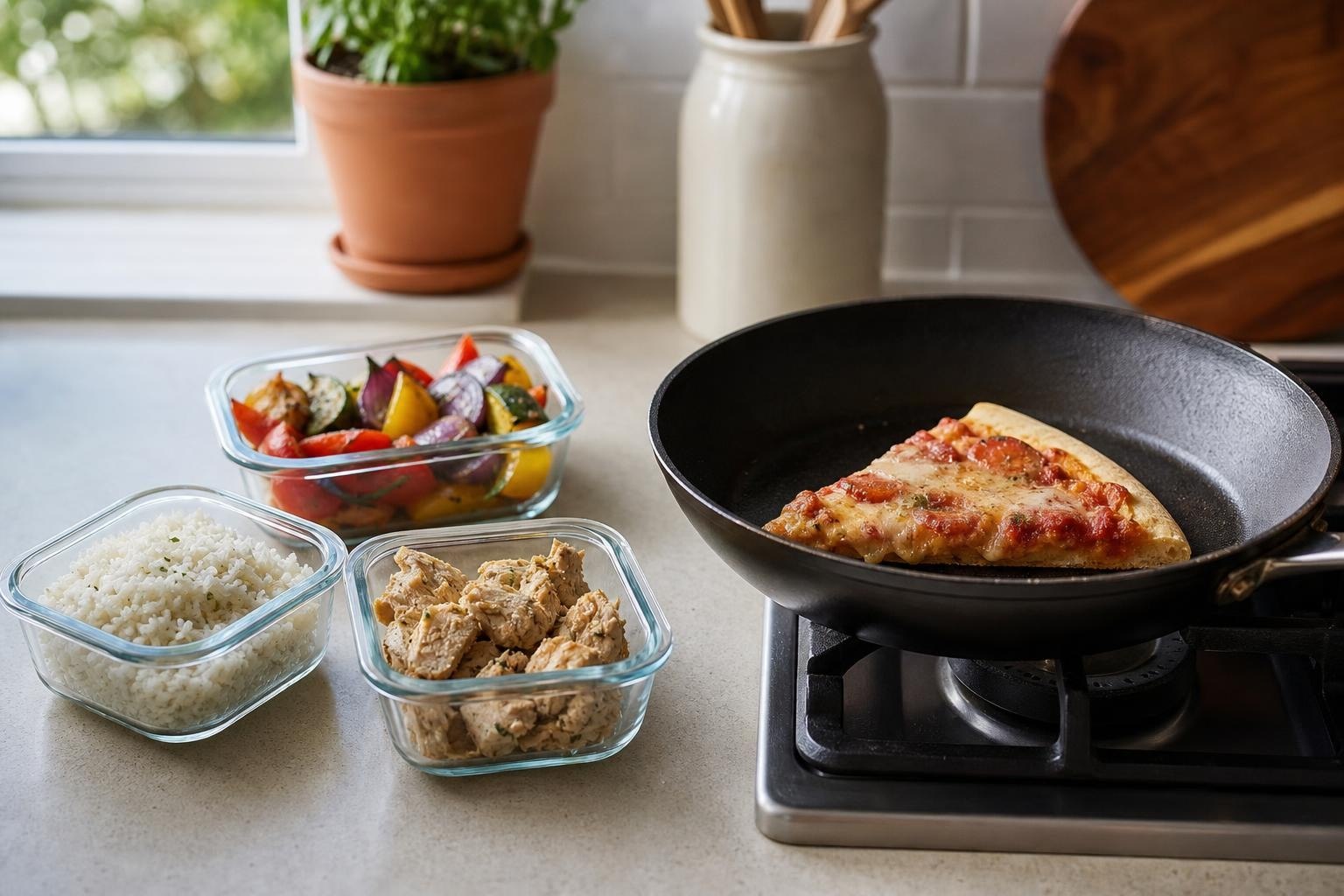
Best method: skillet with a lid
- Place a slice of pizza in a dry skillet over medium-low heat.
- Heat for 2 to 4 minutes, until the bottom starts to crisp.
- Add a few drops of water to the pan away from the pizza.
- Cover with a lid for 1 to 2 minutes so the cheese melts.
This method gives you a crisp bottom and melty top without turning the crust tough. A toaster oven or air fryer also works well for pizza, especially if you are reheating several slices.
How to Reheat Rice, Grains, and Pasta
Rice and grains dry out in the refrigerator because their starches firm up as they cool. Moisture is the key to bringing them back.
For rice and grains
Add 1 to 2 teaspoons of water per cup of rice or grains. Cover and microwave in short bursts, or warm gently in a covered skillet. Fluff with a fork before serving.
For pasta
If the pasta is already sauced, reheat it in a skillet with a splash of water, broth, milk, or extra sauce. Stir gently until the sauce loosens and coats the noodles again.
If the pasta is plain, dip it briefly in simmering water or toss it in a hot skillet with sauce. This helps the texture feel closer to freshly cooked pasta.
How to Reheat Meat Without Drying It Out
Cooked meat can go from tender to dry very quickly, especially chicken breast, pork chops, steak, and turkey. The trick is to use lower heat and add moisture.
- Chicken: Slice it before reheating, add a spoonful of broth or sauce, cover, and warm gently.
- Steak: Reheat slowly in a low oven, then sear briefly in a hot skillet if you want the outside browned.
- Pulled pork or shredded beef: Reheat with a little sauce, broth, or cooking juices in a covered pan.
- Meatballs: Simmer gently in sauce until heated through.
- Turkey: Add gravy or broth, cover tightly, and warm at a low temperature.
For best results, avoid reheating meat repeatedly. Warm only the portion you plan to eat.
How to Reheat Fried Foods and Crispy Leftovers
Fried foods become soggy in the refrigerator because steam softens the coating. To bring back crunch, use dry heat.
An air fryer, toaster oven, or oven is usually best. Reheat fried chicken, fries, breaded cutlets, egg rolls, and crispy potatoes at about 350°F to 375°F until hot and crisp. Flip halfway through so both sides heat evenly.
Avoid covering crispy foods while reheating. Covering traps steam, which is the enemy of crunch.
How to Reheat Vegetables
Vegetables need different treatment depending on how they were cooked.
- Roasted vegetables: Reheat in a hot skillet, toaster oven, oven, or air fryer to restore browned edges.
- Steamed vegetables: Reheat gently in the microwave with a cover, or quickly steam again for a minute or two.
- Green vegetables: Reheat briefly so they do not become mushy or dull in color.
- Mashed or pureed vegetables: Stir in a small splash of milk, cream, broth, or butter and warm gently.
If leftover vegetables seem plain, brighten them after reheating with lemon juice, a drizzle of olive oil, grated cheese, herbs, chili flakes, or toasted nuts.
How to Reheat Soups, Stews, and Saucy Dishes
Soups and stews are some of the most forgiving leftovers, and many taste even better the next day. Reheat them on the stovetop over medium-low heat, stirring occasionally so nothing sticks to the bottom.
If the soup has thickened in the fridge, add water, broth, milk, or coconut milk depending on the recipe. Taste again after reheating, because chilled leftovers often need a small seasoning refresh.
For creamy soups and sauces, avoid a hard boil. Gentle heat helps prevent separation and keeps the texture smooth.
Simple Ways to Make Leftovers Taste New
Sometimes leftovers need more than heat. A small finishing touch can make them feel like a fresh meal.
- Add acid: Lemon juice, lime juice, vinegar, salsa, or pickled onions can wake up rich or heavy dishes.
- Add freshness: Try chopped herbs, scallions, cucumber, avocado, or a handful of greens.
- Add crunch: Top with toasted breadcrumbs, nuts, seeds, tortilla chips, croutons, or crispy onions.
- Add sauce: Yogurt sauce, hot sauce, pesto, gravy, vinaigrette, or a quick pan sauce can refresh dry leftovers.
- Change the format: Turn roasted chicken into tacos, rice into fried rice, vegetables into a frittata, or chili into baked potatoes.
Meal Prep Tips for Easier Reheating
If you know you will be eating leftovers later, a little planning makes reheating much easier.
- Store components separately. Keep sauces, crispy toppings, grains, and proteins in separate containers when possible.
- Cool food before sealing. Let hot food cool slightly before refrigerating so excess steam does not make everything soggy.
- Use shallow containers. Food cools faster and reheats more evenly in shallow portions.
- Label and date containers. This helps you use leftovers while they are still at their best.
- Portion before storing. Individual servings are faster to reheat and reduce the need to warm the same dish multiple times.
For lunches, pack a small container of sauce, dressing, or broth alongside your leftovers. That one extra step can make reheated meals taste fresher and less dry.
Food Safety Basics for Reheating Leftovers
Flavor matters, but safety comes first. Refrigerate leftovers within about two hours of cooking, or sooner if your kitchen is very warm. Store them in airtight containers and use most leftovers within 3 to 4 days.
When reheating, food should be steaming hot throughout. The commonly recommended internal temperature for reheated leftovers is 165°F. This is especially important for meats, casseroles, rice dishes, and mixed meals.
Try to reheat only what you plan to eat. Repeated cooling and reheating can affect both safety and quality.
Quick Reheating Cheat Sheet
- Pizza: Skillet with lid, toaster oven, or air fryer.
- Rice: Add water, cover, and microwave or steam gently.
- Pasta: Reheat in a skillet with extra sauce or a splash of liquid.
- Roasted vegetables: Oven, toaster oven, air fryer, or hot skillet.
- Fried foods: Air fryer, oven, or toaster oven; avoid the microwave.
- Chicken or turkey: Add broth or sauce, cover, and warm gently.
- Soup or stew: Stovetop over medium-low heat, stir occasionally.
- Casseroles: Cover with foil and heat in the oven, then uncover to finish.
The Bottom Line
Better leftovers come down to choosing the right reheating method for the food. Use moisture for dishes that dry out, dry heat for foods that should be crisp, and gentle heat for proteins and creamy sauces.
With a few simple habits, leftovers can become one of the most useful tools in your kitchen. They save time, reduce waste, stretch your grocery budget, and make meal prep feel a lot more rewarding.