



How to Store Potatoes, Onions, and Garlic
A tidy pantry starts with knowing which ingredients should stay together—and which ones need their own space. Here’s how to keep potatoes, onions, and garlic fresh, flavorful, and ready for weeknight cooking.
Why Proper Storage Matters
Potatoes, onions, and garlic are pantry staples for good reason: they are affordable, versatile, and used in countless home-cooked meals. But even sturdy ingredients can sprout, soften, mold, or lose flavor when stored in the wrong place.
The good news is that a few simple storage habits can help them last longer. The key is to manage three things: light, moisture, and airflow. Most storage problems happen when these ingredients are kept in plastic bags, warm cabinets, damp corners, or too close to one another.
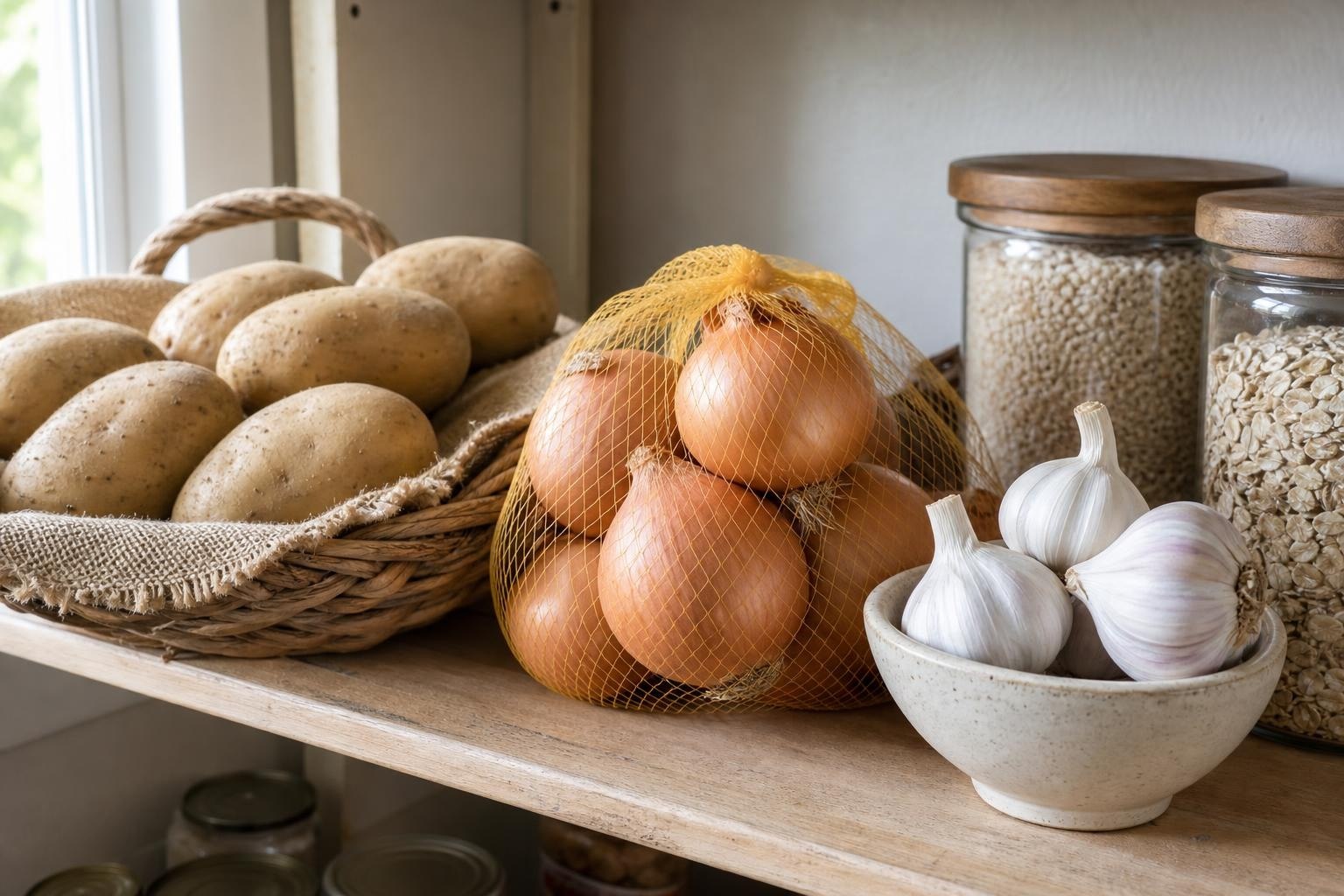
Think of your pantry like a mini root cellar: cool, dark, dry, and breathable. Once you set up the right zones, potatoes, onions, and garlic become much easier to keep fresh.
Quick Storage Rules at a Glance
- Potatoes: Store in a cool, dark, well-ventilated place. Keep them away from onions.
- Onions: Store whole onions in a dry, airy spot. Do not refrigerate whole onions unless they are cut or peeled.
- Garlic: Store whole bulbs in a cool, dry, ventilated place. Keep cloves together until you are ready to use them.
- Avoid plastic bags: They trap moisture and encourage mold and sprouting.
- Check regularly: Remove any soft, moldy, or sprouting pieces before they affect the rest.
How to Store Potatoes
Potatoes store best in a place that is cool, dark, dry, and ventilated. A pantry shelf, basement storage area, cellar, or cool cabinet away from the stove can work well. Ideally, potatoes like temperatures around 45°F to 55°F, but most home kitchens are warmer than that. If your kitchen runs warm, choose the coolest dark spot you have.
Best containers for potatoes
Use something that allows air to circulate. Good options include:
- A paper bag with the top loosely folded
- A basket lined with a clean towel
- A cardboard box with ventilation holes
- A mesh or burlap bag
Avoid sealing potatoes in plastic bags or airtight containers. Trapped moisture can lead to mold, soft spots, and unpleasant smells.
Should potatoes go in the refrigerator?
For everyday storage, it is best to avoid refrigerating raw whole potatoes. Cold refrigerator temperatures can change some of the potato starches into sugars, which may affect flavor, texture, and browning during cooking. A cool pantry or storage closet is usually a better choice.
Keep potatoes away from light
Light encourages potatoes to turn green and develop bitter compounds. If you see green patches, peel them away generously before cooking. If a potato is very green, very bitter-smelling, shriveled, or soft, it is safest to discard it.
What about sprouted potatoes?
Small sprouts are common, especially if potatoes have been stored for a while. If the potato is still firm, you can usually cut away the sprouts and any surrounding eyes before cooking. If it is soft, wrinkled, moldy, or smells off, toss it.
How to Store Onions
Whole storage onions, such as yellow, white, and red onions, prefer a cool, dry, dark, and well-ventilated place. They do not like moisture, so avoid keeping them under the sink or near a dishwasher where humidity can build up.
Best containers for onions
Onions need airflow around them. Store them in:
- A mesh bag
- A wire basket
- A ventilated bin
- A paper bag with holes punched in it
Do not store whole onions in a sealed plastic bag. Moisture can collect inside the bag and cause the onions to soften or mold.
Should onions be refrigerated?
Whole, unpeeled storage onions are usually best kept out of the refrigerator. The fridge is humid, and that moisture can make onions soft or moldy. However, once an onion is cut, peeled, or sliced, it should be stored in the refrigerator in an airtight container.
Use cut onions within about 7 to 10 days for best quality. If they become slimy, smell sour, or show mold, discard them.
Sweet onions need extra care
Sweet onions, such as Vidalia or Walla Walla onions, have a higher moisture content than regular storage onions. They usually do not last as long. If your kitchen is warm, sweet onions may keep better in the refrigerator, loosely wrapped or stored in a breathable bag, and used within a couple of weeks.
How to Store Garlic
Garlic is happiest in a cool, dry, dark place with good airflow. Whole bulbs last longer than separated cloves, so keep the bulb intact until you are ready to cook.
Best containers for garlic
Garlic does well in breathable storage. Try:
- A small wire basket
- A ceramic garlic keeper with ventilation holes
- A mesh bag
- A paper bag left loosely open
Avoid storing whole garlic bulbs in airtight containers or plastic bags. Garlic needs air circulation to stay dry and firm.
How long does garlic last?
Whole garlic bulbs can last for several weeks to a few months when stored well. Once you separate the cloves, they will not last as long. Peeled garlic cloves should be refrigerated in a sealed container and used within a few days.
Can garlic go in the refrigerator?
Whole garlic bulbs generally do not need refrigeration. In fact, refrigerator storage can sometimes encourage sprouting after the garlic is brought back to room temperature. Refrigerate garlic only once it is peeled, chopped, or cooked into something like roasted garlic.
Should You Store Potatoes, Onions, and Garlic Together?
This is one of the most common pantry questions, and the short answer is: do not store potatoes and onions together.
Potatoes release moisture and gases as they age, and onions can contribute strong aromas and storage conditions that speed up spoilage. When kept side by side, both ingredients may sprout or soften faster. For best results, give them separate spaces with plenty of airflow.
Garlic can usually be stored near onions because they have similar dry, ventilated storage needs. However, avoid crowding them together in a closed bin. Separate baskets or breathable containers are best.
A practical pantry setup
If you have one pantry shelf, try this simple arrangement:
- Left side: Potatoes in a paper bag, basket, or ventilated box
- Right side: Onions in a mesh bag or wire basket
- Upper shelf or separate basket: Garlic bulbs in a small breathable container
Leave space between each group so air can move around them. If possible, keep potatoes lower, where the temperature is often slightly cooler and darker.
Common Storage Mistakes to Avoid
- Keeping them in plastic produce bags: Plastic traps moisture and reduces airflow.
- Storing potatoes near the stove: Heat encourages sprouting and softening.
- Putting whole onions in the refrigerator: Humidity can make them mushy.
- Storing everything in one closed bin: Potatoes, onions, and garlic need space and ventilation.
- Ignoring one bad piece: A single moldy onion or rotten potato can affect the rest quickly.
- Washing before storage: Extra moisture shortens shelf life. Wash only right before using.
How to Tell When They Have Gone Bad
Potatoes
Discard potatoes that are very soft, wet, moldy, deeply green, or have a strong rotten smell. A firm potato with a few small sprouts can often still be used after trimming.
Onions
Throw away onions that are mushy, leaking, moldy, or smell sour. A dry, papery outer layer is normal, but the inside should be firm and fresh-smelling.
Garlic
Fresh garlic cloves should feel firm. Discard garlic that is soft, moldy, shriveled, or has an unpleasant odor. Green sprouts are not dangerous, but they can taste bitter, so you may want to remove the sprout from the center of the clove before cooking.
Smart Tips for Cooking and Meal Planning
Good storage is not only about preventing waste. It also makes cooking easier. When your pantry staples are organized, you can quickly build meals like soups, sheet-pan dinners, roasted vegetables, skillet potatoes, stews, and sauces.
- Use older potatoes first: Keep newer potatoes behind older ones so you naturally rotate your supply.
- Buy smaller amounts in warm months: Potatoes and onions may sprout faster in summer kitchens.
- Prep cut onions safely: Store chopped onions in a sealed container in the refrigerator for quick weeknight cooking.
- Roast extra garlic: If garlic bulbs are starting to age but are still good, roast them and refrigerate the softened cloves for spreading on bread or stirring into mashed potatoes.
- Plan recipes around what needs using: Softening onions can go into soup, firm sprouted potatoes can become hash, and extra garlic can flavor marinades or sauces.
Simple Pantry Organization Idea
Create a small “root vegetable station” in your pantry or kitchen storage area. Use three breathable containers: one for potatoes, one for onions, and one for garlic. Labeling is optional, but the important part is separation and airflow.
Once a week, take 30 seconds to check each container. Remove anything soft or spoiled, move older items to the front, and make a mental note of what to use soon. This tiny habit can save money and prevent the dreaded mystery smell in the pantry.
The Bottom Line
Potatoes, onions, and garlic all last longer when stored in cool, dark, dry, and ventilated conditions. The biggest rule to remember is to keep potatoes away from onions. Store garlic in its own breathable spot, keep everything out of sealed plastic, and refrigerate only after cutting or peeling.
With a few baskets, paper bags, or ventilated bins, you can keep these everyday ingredients fresher for longer and make your kitchen feel more organized every time you cook.