



How to Store Fresh Herbs So They Last Longer
Fresh herbs can brighten almost any meal, but they wilt quickly if you toss them straight into the fridge. Here’s how to store basil, cilantro, parsley, mint, and other herbs so they stay fresh and ready to use.
Why Fresh Herbs Spoil So Quickly
Fresh herbs are one of the easiest ways to make home-cooked food taste brighter, fresher, and more finished. A handful of parsley can wake up a soup, basil can turn simple tomatoes into something special, and cilantro can make tacos, rice bowls, and curries taste complete.
The problem is that herbs are delicate. They can wilt, turn slimy, dry out, or brown within just a few days if they are stored the wrong way. The good news is that a few small changes can help your herbs last much longer.
The best storage method depends on the type of herb. Some herbs behave more like flowers and like to sit in a little water. Others do better wrapped gently and kept cool. Once you know which method to use, storing herbs becomes quick and simple.
Start With the Freshest Herbs You Can
Herbs last longer when they are fresh at the time you buy them. Whether you shop at the grocery store, farmers market, or grow herbs at home, look for bunches that are perky, colorful, and fragrant.
What to look for when buying herbs
- Bright color: Leaves should look vibrant, not yellowed or dull.
- No slimy spots: Avoid bunches with wet, mushy, or blackened leaves.
- Fresh aroma: Herbs should smell like themselves. Basil should smell sweet and peppery, mint should smell cool and strong, and cilantro should smell fresh and citrusy.
- Firm stems: Stems should not be limp, overly dry, or cracked.
If herbs are already wilted at the store, storage tricks may help a little, but they will not last as long as a fresh bunch.
Soft Herbs vs. Hardy Herbs
The easiest way to decide how to store fresh herbs is to divide them into two groups: soft herbs and hardy herbs.
Soft herbs
Soft herbs have tender stems and delicate leaves. They usually need moisture, but not too much. Common soft herbs include:
- Parsley
- Cilantro
- Dill
- Mint
- Basil
- Tarragon
- Chervil
Hardy herbs
Hardy herbs have woody stems and sturdier leaves. They usually prefer being wrapped and stored in the refrigerator. Common hardy herbs include:
- Rosemary
- Thyme
- Oregano
- Sage
- Marjoram
Once you know which type you have, you can choose the right storage method and avoid the common mistake of treating all herbs the same.
The Jar Method for Parsley, Cilantro, Dill, and Mint
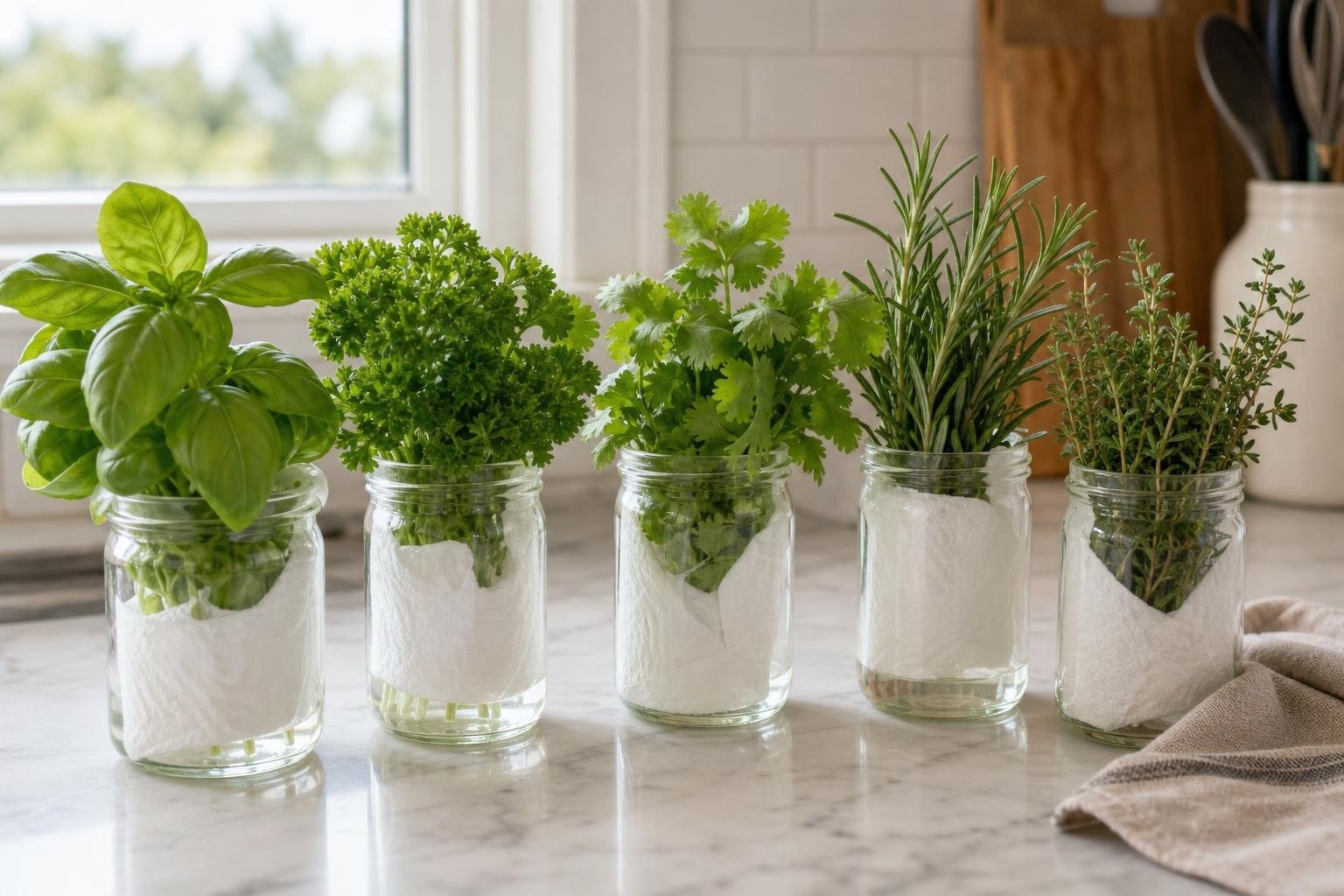
For many soft herbs, the best method is to store them like a small bouquet of flowers. This works especially well for parsley, cilantro, dill, and mint.
How to do it
- Remove any rubber bands, twist ties, or damaged leaves.
- Trim a small amount from the bottom of the stems.
- Place the herbs upright in a jar or glass with about 1 inch of water.
- Cover the leaves loosely with a plastic bag or reusable produce bag.
- Store the jar in the refrigerator.
- Change the water every few days, or whenever it looks cloudy.
This method helps the herbs take up moisture through their stems while protecting the leaves from drying out in the fridge. It also makes herbs easy to see, which means you are more likely to use them before they spoil.
Best for
- Parsley
- Cilantro
- Mint
- Dill
Tip: If your fridge shelves are short, use a shorter jar and trim the stems a little more so the bunch fits comfortably.
The Special Rule for Basil
Basil is a soft herb, but it does not love the refrigerator. Cold temperatures can make basil leaves turn black or brown. For the best texture and flavor, store fresh basil at room temperature.
How to store basil
- Trim the ends of the stems.
- Place the basil in a jar with a little water, just like flowers.
- Keep it on the counter, away from direct sunlight and heat.
- Cover very loosely with a bag if your kitchen is dry, but do not seal it tightly.
- Change the water every day or two.
Use basil within a few days for the best flavor. If you have more than you can use, turn it into pesto, blend it into herb oil, or freeze it before it darkens.
The Paper Towel Method for Rosemary, Thyme, Sage, and Oregano
Hardy herbs do best with a little moisture and some air protection. A slightly damp paper towel helps keep them from drying out, while a loose bag or container keeps them from absorbing too many fridge odors.
How to do it
- Pick out any wilted or browned sprigs.
- Lightly dampen a paper towel. It should be barely damp, not wet.
- Wrap the herbs loosely in the towel.
- Place the wrapped herbs in a zip-top bag, reusable bag, or airtight container.
- Store in the refrigerator, ideally in the crisper drawer.
This method works well because woody herbs do not need to stand in water. Too much moisture can make them moldy, so the key is to keep the towel lightly damp rather than soggy.
Best for
- Rosemary
- Thyme
- Sage
- Oregano
- Marjoram
Should You Wash Herbs Before Storing Them?
In most cases, it is best to wait to wash herbs until you are ready to use them. Extra water can cause herbs to wilt or become slimy faster, especially if they are packed tightly in a bag.
That said, if your herbs are very sandy or dirty, you can wash them before storing. Just make sure they are dried thoroughly.
How to wash herbs if needed
- Swish the herbs gently in a bowl of cool water.
- Lift them out instead of pouring the water over them, so dirt stays behind in the bowl.
- Spin them dry in a salad spinner or pat them gently with a clean towel.
- Let them air-dry for a few minutes before storing.
Dry leaves are important. Water sitting on herb leaves is one of the fastest ways to create slime and spoilage.
How Long Fresh Herbs Usually Last
Storage time depends on how fresh the herbs were when you bought them and how carefully they are stored, but these general timelines can help you plan.
- Basil: 3 to 5 days at room temperature
- Parsley: 1 to 2 weeks in a jar in the fridge
- Cilantro: 1 to 2 weeks in a jar in the fridge
- Mint: 1 to 2 weeks in a jar in the fridge
- Dill: 5 to 10 days in a jar in the fridge
- Rosemary: 2 to 3 weeks wrapped in the fridge
- Thyme: 1 to 2 weeks wrapped in the fridge
- Sage: 1 to 2 weeks wrapped in the fridge
- Oregano: 1 to 2 weeks wrapped in the fridge
These are estimates, not strict rules. Always check herbs before using them. If they smell unpleasant, feel slimy, or show mold, it is time to discard them.
How to Revive Wilted Herbs
If herbs are limp but not slimy or spoiled, you may be able to revive them. This works especially well with parsley, cilantro, mint, and dill.
Quick herb revival method
- Trim the bottom of the stems.
- Place the herbs in a glass of cold water.
- Let them sit for 15 to 30 minutes.
- Pat dry before using.
For very limp herbs, you can soak them in a bowl of ice water for a few minutes. This can help crisp them up enough for garnishes, salads, sauces, or finishing a dish.
Freeze Herbs Before They Go Bad
If you know you will not use a bunch of herbs in time, freezing is a smart way to save them. Frozen herbs will not have the same texture as fresh herbs, so they are best used in cooked dishes, sauces, soups, stews, marinades, and dressings.
Option 1: Freeze chopped herbs in ice cube trays
- Chop the herbs.
- Place them in an ice cube tray.
- Cover with olive oil, broth, or water.
- Freeze until solid.
- Transfer cubes to a freezer bag or container.
These cubes are great for starting soups, sautéing vegetables, adding flavor to sauces, or stirring into beans and grains.
Option 2: Freeze herbs flat
- Wash and dry herbs very well.
- Remove leaves from thick stems if needed.
- Spread on a tray and freeze until firm.
- Transfer to a freezer-safe bag or container.
This method works nicely for parsley, cilantro, dill, thyme, and rosemary. You can crumble or chop the frozen herbs as needed.
Easy Ways to Use Herbs Before They Spoil
One of the best storage tips is also the simplest: make herbs easy to use. If they are visible, organized, and ready to grab, you are more likely to add them to everyday meals.
Simple ways to use extra herbs
- Stir chopped parsley or cilantro into rice, couscous, or quinoa.
- Add mint to iced tea, lemonade, fruit salad, or yogurt bowls.
- Blend basil, parsley, or cilantro into pesto or green sauce.
- Mix chopped herbs into softened butter for bread, vegetables, fish, or chicken.
- Add dill to eggs, potatoes, cucumber salads, or creamy dressings.
- Sprinkle herbs over soups, tacos, roasted vegetables, or grain bowls.
- Add rosemary or thyme to roasted potatoes, chicken, beans, or bread dough.
You do not need a special recipe to use herbs. Think of them as a finishing ingredient that adds freshness, color, and flavor.
Common Herb Storage Mistakes to Avoid
A few common mistakes can shorten the life of fresh herbs. Avoiding these will make a big difference.
- Leaving herbs in a tight grocery store bag: This traps moisture and can lead to slime.
- Storing wet herbs: Excess water on leaves can speed up spoilage.
- Putting basil in the fridge: Cold temperatures can turn basil dark.
- Using too much water for hardy herbs: Rosemary, thyme, sage, and oregano can mold if they are too damp.
- Forgetting about them: Store herbs where you can see them so they do not get buried in the fridge.
A Simple Herb Storage Cheat Sheet
If you only remember one thing, remember this: tender herbs usually like the jar method, woody herbs usually like the towel method, and basil likes the counter.
- Parsley, cilantro, mint, dill: Trim stems, place in a jar with water, cover loosely, refrigerate.
- Basil: Trim stems, place in a jar with water, keep at room temperature.
- Rosemary, thyme, sage, oregano: Wrap in a barely damp paper towel, place in a bag or container, refrigerate.
With just a jar, a towel, and a little planning, you can keep fresh herbs usable for days or even weeks longer. That means less waste, better-tasting meals, and more confidence when buying herbs for your favorite recipes.